
Phishing Simulation Tool for Corporate Teams: What to Look for and How to Run Your First Campaign
Discover how to choose a phishing simulation tool, run your first corporate campaign, measure employee risk, and build a security culture that lasts.
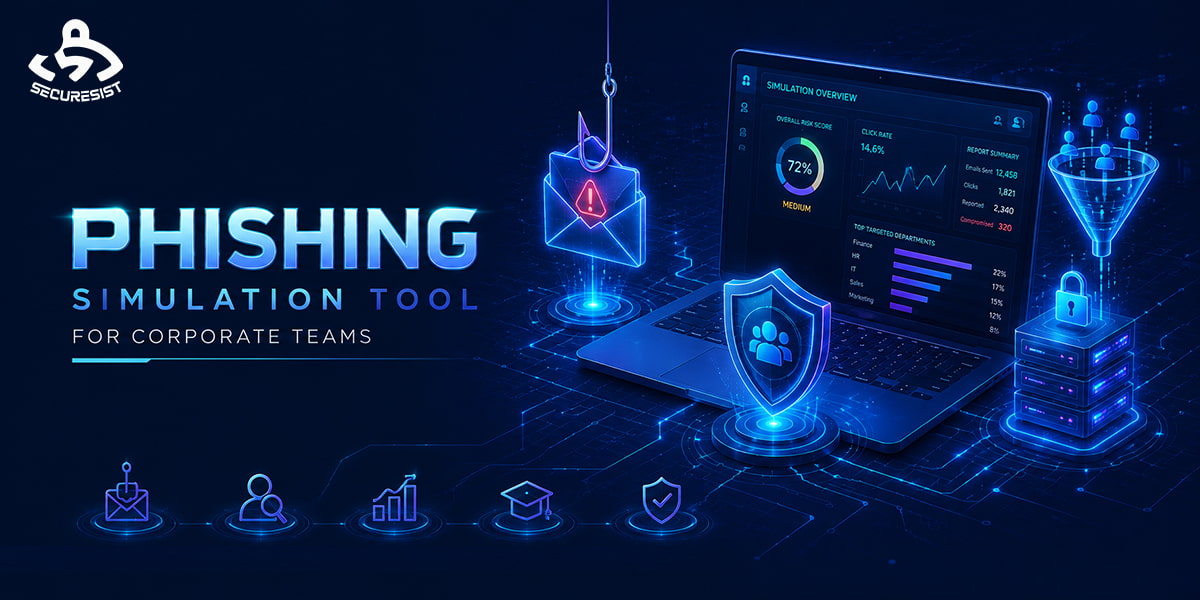
Cybersecurity awareness training has become a standard practice for many organizations. Employees attend annual training sessions, complete online modules, and answer a few quizzes. Yet phishing attacks continue to succeed.
The problem is simple. Most employees forget what they learned after a few weeks. When a real phishing email arrives during a busy workday, people react quickly rather than carefully.
This is why organizations are investing in a phishing simulation tool for corporate teams. Instead of only explaining threats, companies can safely test employees using realistic phishing emails and measure how people actually respond. Understanding what phishing is and how it works is the foundation, but simulation turns that knowledge into measurable behavior change.
A well-designed employee phishing simulation helps security teams identify risky behaviors, improve reporting habits, and reduce human error before attackers exploit it. Modern phishing campaigns target finance teams, executives, HR staff, and remote employees using convincing messages that often look genuine. This is increasingly recognized as a human risk management challenge — one that technology alone cannot solve.
For businesses in the UAE, where digital transformation and cloud adoption continue to grow, human risk has become one of the biggest cybersecurity concerns. Running a corporate phishing test gives organizations a practical way to understand their exposure and strengthen their first line of defense.
Why Corporate Teams Need Phishing Simulations, Not Just Phishing Training
Traditional awareness training has one major weakness. It assumes employees will remember security lessons months later when a real attack appears.
Unfortunately, attackers do not operate on training schedules.
A phishing email might arrive during month-end accounting, during a holiday period, or while employees are handling dozens of emails at once. Under pressure, even experienced staff can make mistakes.
Modern attackers understand human behavior very well. They create urgency, authority, and trust. They impersonate executives, suppliers, HR departments, and even internal IT teams — using the same social engineering techniques that make phishing so difficult to detect without practice.
Phishing simulations give employees something that training videos cannot provide: experience. Instead of reading about suspicious emails, employees encounter realistic scenarios in a controlled environment. When they click a suspicious link or report an email correctly, they learn from that experience. This is why phishing simulations have become a core part of modern security awareness programs.
Security researchers increasingly emphasize continuous testing instead of yearly awareness sessions because behavior changes through practice, not repetition alone.
Some benefits of phishing simulations include:
• Identifying high-risk departments
• Measuring employee reporting behavior
• Reinforcing security awareness regularly
• Creating teachable moments after mistakes
• Tracking improvements over time
Organizations that only provide annual training often struggle to measure whether employees can actually recognize phishing attacks. A phishing campaign for businesses provides measurable results rather than assumptions. Pairing simulations with a structured security awareness training program compounds those results significantly over time.
The Five Things a Phishing Simulation Tool Must Do for Corporate Environments
Not every platform delivers the same results. A corporate phishing test should go beyond sending fake emails.
1. Realistic Templates That Mirror Real-World Attack Patterns
Employees quickly recognize unrealistic phishing emails.
If every simulation contains spelling mistakes, strange logos, or suspicious links, users will eventually learn how to identify the training itself rather than the attack. It is also important that simulations cover link manipulation tactics — one of the most common ways attackers disguise malicious URLs as legitimate ones.
Modern attackers use polished language, company branding, invoices, meeting requests, and internal communication styles. The best phishing simulation tools create realistic scenarios such as:
• Invoice requests
• Password reset messages
• HR announcements
• Cloud application notifications
• Executive requests
Many modern platforms now emphasize simulation realism because organizations need employees to recognize actual threats rather than obvious training exercises.
2. Targeting by Department, Role, or Risk Level
Every employee faces different risks.
Finance teams may receive fake invoices. HR departments might receive resumes or payroll requests. Executives are often targeted through business email compromise attacks. Ransomware attacks frequently begin with a phishing email targeting a specific employee — making role-based testing critical to a complete defense strategy.
A good employee phishing simulation platform allows security teams to:
• Test departments separately
• Create role-specific campaigns
• Identify repeat clickers
• Focus training on higher-risk users
This targeted approach produces much better results than sending identical emails to the entire company.
3. Immediate Learning Moments, Not Just Failure Notifications
One of the biggest mistakes organizations make is treating simulations as exams.
Employees should not feel punished. When someone clicks a phishing link, the platform should immediately explain:
• Why was the email suspicious?
• Which warning signs were missed?
• How to respond next time?
Immediate feedback creates stronger learning experiences than waiting for monthly reports. Some platforms now deliver micro-learning directly after user mistakes, helping employees understand the risk while the experience is still fresh.
4. Consolidated Reporting That Ties Directly to Training Outcomes
A phishing simulation tool should provide meaningful data. Security teams need answers to questions such as:
• Which department has the highest click rate?
• Who reports suspicious emails?
• Which users repeatedly fail simulations?
• Are employees improving over time?
Behavioral reporting has become increasingly important because organizations want to measure risk reduction rather than simply count failures. Without clear reporting, simulations become another compliance exercise. Linking results directly to cybersecurity training for employees closes the loop between testing and learning.
5. Scheduling and Automation So It Runs Without Manual Overhead
Many security teams operate with limited resources. Running manual campaigns every month becomes difficult, especially for larger organizations. Automation allows companies to:
• Schedule campaigns regularly
• Rotate templates automatically
• Deliver follow-up training
• Track long-term trends
• Reduce administrative effort
Continuous testing often produces stronger results because employees never know when a simulation may appear. This uncertainty encourages better security habits year-round, which is why the best security awareness training platforms combine automation with adaptive content rather than fixed annual schedules.

How to Run Your First Corporate Phishing Simulation: A Step-by-Step Walkthrough
Buying a phishing simulation platform is the easy part. Running your first campaign successfully is where many organizations struggle.
Some companies make the mistake of launching aggressive phishing tests immediately. Others send unrealistic emails that employees can easily identify. In some cases, employees feel embarrassed or punished, which creates resistance toward future awareness programs.
A phishing simulation should never feel like a trap. Its purpose is to educate employees, identify risks, and improve security behavior over time. The most successful programs treat simulations as learning opportunities rather than examinations.
Step 1: Define the Objective
Before sending the first simulated phishing email, security teams should decide what they want to measure. Different organizations have different goals. Some want to understand how vulnerable employees are to phishing attacks. Others want to measure reporting rates or evaluate a specific department.
Questions to consider include:
• Are employees able to identify suspicious emails?
• Which departments are most vulnerable?
• Are employees reporting suspicious messages?
• Has awareness improved after previous training?
Clear objectives make it easier to measure success later.
Step 2: Start Small
Many organizations test the entire company during the first campaign. That approach often creates unnecessary pressure and produces too much data at once. Instead, begin with a smaller group. Finance teams, HR departments, and administrative staff are often good starting points because they frequently receive external emails and are commonly targeted by attackers. A phishing test focused on employee security awareness at the department level gives you cleaner, more actionable data.
Step 3: Choose a Realistic Scenario
One reason phishing simulations fail is that the emails feel fake. Employees quickly recognize poorly written messages with spelling mistakes, suspicious links, or unrealistic requests. Unfortunately, real attackers rarely make these mistakes anymore.
A good simulation should resemble the emails employees receive every day. Examples include:
• Invoice requests
• Password expiration notices
• Meeting invitations
• HR announcements
• Internal IT messages
• Cloud application notifications
The goal is not to trick employees unfairly. The goal is to recreate realistic situations that employees may encounter during their normal workday.
Step 4: Launch the Campaign Quietly
Employees should not receive advance notice about the exact date or time of the simulation. If everyone knows when the campaign is coming, the results become less meaningful.
Some organizations schedule campaigns at different times of the day or across several weeks. This approach helps create realistic conditions and produces more accurate data. At the same time, leadership should support the program. Employees should understand that phishing simulations exist to improve security awareness, not to punish mistakes.
Step 5: Review the Results
Once the campaign ends, the real work begins. Security teams should look beyond click rates alone. A single number rarely tells the full story.
Important questions include:
• Which departments clicked the most?
• Which employees reported the email?
• Did anyone submit credentials?
• Are certain attack themes more successful?
• Which users may need additional training?
The objective is not to identify bad employees. The objective is to identify areas where additional awareness may be needed. This is also an opportunity to introduce data security awareness training for departments that handle sensitive information and repeatedly show vulnerability in simulations.
What Click Rates and Report Rates Actually Tell You About Your Team’s Risk Level
Many organizations focus entirely on click rates. A report showing that 12 percent of employees clicked a phishing email may seem useful, but the number alone does not provide enough context.
For example, one department may have a high click rate but also a high reporting rate. Another department may have fewer clicks but almost no reporting activity. These differences matter significantly.
Several important metrics can help organizations understand employee risk:
• Click rate
• Credential submission rate
• Reporting rate
• Repeat failures
• Department-level trends
The reporting rate is often one of the most valuable indicators. Employees who report suspicious emails are actively participating in security. Even if some employees make mistakes, strong reporting behavior helps security teams detect real attacks faster. This connects directly to what makes cloud email security more effective — when employees flag suspicious messages, automated systems have more signals to act on.
Repeat failures can also reveal important trends. If the same users repeatedly fail simulations, additional coaching or role-specific training may be necessary.
It is also important to remember that low click rates do not automatically mean low risk. Employees may recognize one type of phishing email but struggle with another. Attackers constantly change their tactics, which is why simulations should evolve as well.
Over time, organizations should look for trends rather than focusing on individual campaigns. Questions worth asking include:
• Are reporting rates increasing?
• Are repeat failures decreasing?
• Are departments improving over time?
• Are employees becoming more cautious?
A successful phishing simulation program is not measured by how many employees fail. It is measured by how much employees improve.
How Often Should Corporate Teams Run Phishing Simulations?
One of the most common questions organizations ask after running their first phishing campaign is simple: how often should we do this?
There is no single answer that works for every company. A small business with twenty employees may not need the same testing schedule as a large enterprise with multiple departments and hundreds of users.
However, one thing is clear. Running a phishing simulation once a year is rarely enough.
Cybercriminals do not wait for annual security awareness programs. New phishing campaigns appear every week. Attackers constantly change their tactics, impersonate new brands, and use current events to trick employees. Staying ahead requires continuous cybersecurity awareness rather than periodic bursts of training.
Many organizations now prefer smaller and more frequent simulations. Monthly or quarterly campaigns help employees stay alert without making security awareness feel overwhelming. Some companies run:
• Monthly phishing simulations for all employees
• Quarterly department-specific campaigns
• Additional testing for high-risk teams
• Simulations after major security incidents
• Role-based campaigns for executives and finance staff
Organizations should also avoid sending the same type of simulation repeatedly. Employees quickly learn to recognize familiar templates, which reduces the effectiveness of the program.
Effective phishing programs rotate attack scenarios, including:
• Invoice scams
• Cloud login requests
• HR notifications
• Internal IT messages
• Delivery notifications
• Executive requests
This variety helps employees develop broader awareness rather than memorizing one type of attack. Combining rotating simulations with a strong employee security training program for ransomware threats is particularly effective, since many ransomware incidents begin with exactly the type of phishing email employees encounter in simulations.
Another important factor is simulation fatigue. If employees receive phishing tests too frequently, they may become frustrated or begin treating every email as suspicious. Security teams should strike a balance between regular awareness and excessive testing. The best programs create continuous learning rather than constant pressure.
Building a Security Culture Through Phishing Simulations
A phishing simulation tool is not just a testing platform. Its real value lies in helping organizations build a stronger security culture.
Many employees still view cybersecurity as the responsibility of the IT department. They assume security teams handle threats while everyone else focuses on their own work.
Unfortunately, modern attacks target employees directly. Finance teams receive fraudulent invoices. HR departments receive malicious attachments. Executives become targets for business email compromise attacks. Customer service teams deal with social engineering attempts.
This means employees are no longer simply users of technology. They have become part of the organization’s security defenses.
Phishing simulations help reinforce this idea. When employees encounter realistic attacks in a safe environment, they begin to recognize warning signs. They become more cautious when receiving unusual requests and more comfortable reporting suspicious emails. This behavioral shift is what separates organizations with strong security awareness training from those that rely on technology controls alone.
Leadership also plays an important role. When executives participate in awareness programs and openly support phishing simulations, employees understand that security is a business priority rather than an IT requirement. Choosing the right security awareness training provider can make leadership involvement easier by providing executive-specific materials and reporting that resonates at the board level.
Organizations that achieve the strongest results often focus on:
• Education rather than punishment
• Positive reinforcement
• Continuous learning
• Open communication
• Leadership involvement
Employees should never feel embarrassed for making mistakes during simulations. A failed simulation is often the most valuable learning moment because it shows employees exactly how attackers operate.
Over time, phishing simulations help create habits. Employees pause before clicking unfamiliar links. They verify unusual requests. They report suspicious emails to security teams. Small changes in behavior can significantly reduce organizational risk.
Conclusion
Phishing attacks continue to be one of the most successful methods used by cybercriminals because they target people rather than technology. Traditional awareness training remains important, but training alone often fails to change behavior. Understanding the top cybersecurity tools available in 2026 is useful context, but no tool replaces the behavioral change that comes from experiencing a realistic phishing scenario firsthand.
A phishing simulation tool for corporate teams helps organizations identify risks, improve reporting behavior, and strengthen security awareness across the workforce. The most effective programs focus on realistic scenarios, role-based testing, meaningful reporting, and continuous improvement. They treat simulations as learning opportunities rather than examinations.
Ultimately, the goal is not to reduce click rates alone. The goal is to create employees who recognize suspicious activity, report potential threats, and actively contribute to the organization’s security culture.
When done correctly, phishing simulations become much more than a security exercise. They become an important part of building a stronger and more resilient workforce.
FAQS:
What is a phishing simulation tool?
A phishing simulation tool allows organizations to send realistic but safe phishing emails to employees to measure awareness, identify risks, and improve security behavior.
Is phishing simulation legal in the UAE?
Yes. Internal phishing simulations conducted for employee awareness and security training purposes are generally permitted. Organizations should communicate their awareness policies clearly and ensure simulations support security and training objectives.
How do you run a phishing simulation without damaging employee trust?
Organizations should treat simulations as educational exercises rather than punishment. Providing immediate feedback, offering additional training, and avoiding public criticism helps maintain employee trust.
What is a good phishing click rate for a corporate team?
There is no universal benchmark because results vary by industry and organization. Many companies focus less on individual click rates and more on long-term improvement, higher reporting rates, and reduced repeat failures over time.
How does phishing simulation connect to broader security awareness?
Simulations work best as part of a complete security awareness training program that includes role-based content, leadership involvement, and continuous reinforcement — not as a standalone exercise run once a year.
Ready to Find Out How Vulnerable Your Team Really Is?
Most organizations discover their phishing vulnerabilities after an attacker already has access. A single employee clicking the wrong link can trigger a data breach, a ransomware incident, or a compliance violation that takes months to recover from.
Securesist helps organizations run realistic phishing simulations, track employee reporting behavior, and build awareness programs that create lasting change — not just better numbers on a dashboard.
Here is what you get when you work with Securesist:
• A clear baseline of your organization’s phishing risk by department and role
• Realistic simulations tailored to the threats your industry actually faces
• Reporting behavior tracking so you know who is responding and who is not
• Ongoing training that reduces human risk month over month
• A dedicated team that understands the UAE threat landscape
The question is not whether your employees will be targeted. The question is whether they will be ready.